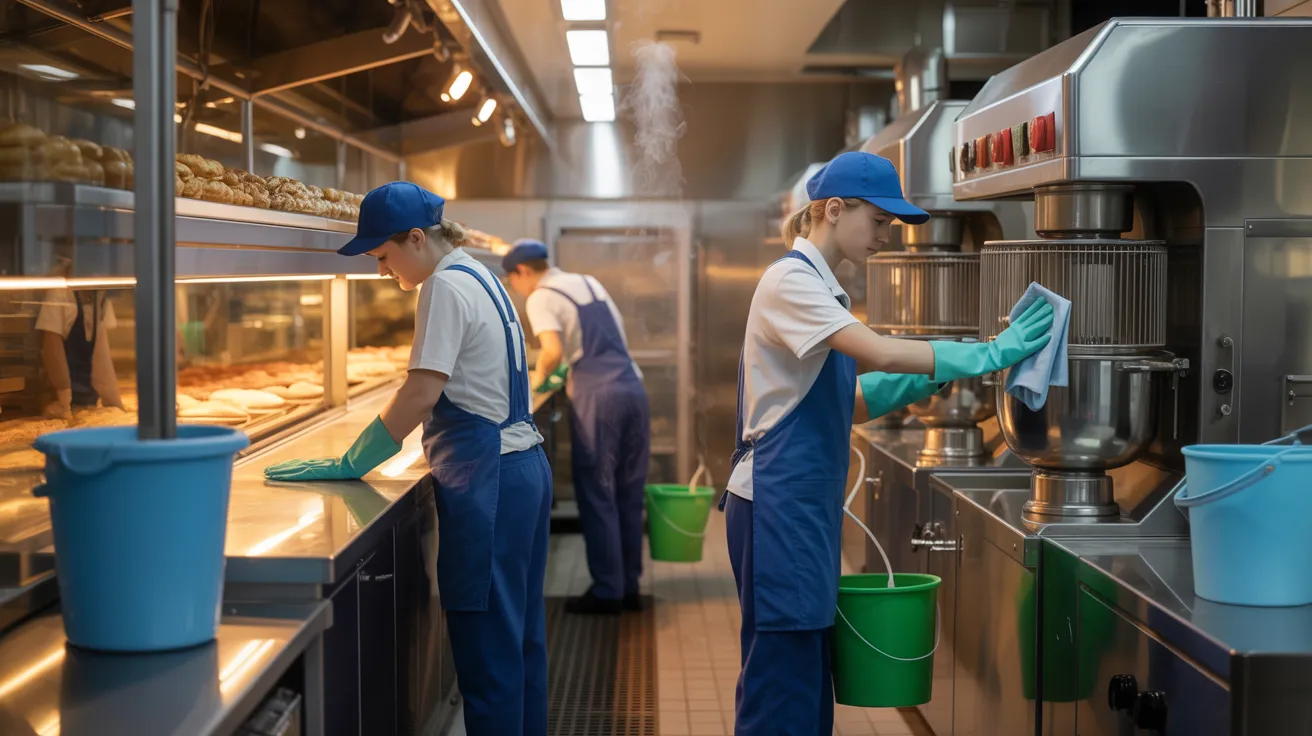
Brampton food safety and professional sanitation experts help you keep restaurants, commissaries, baking facilities, warehouses, and mobile food operations clean to code. They disinfect high-touch points, food preparation areas, equipment, floors, drains, restrooms, and prep zones using approved chemicals, correct dilution, and documented contact times. in maintaining dining venues, food supply centers, bakeries, warehouses, and mobile food operations to code. They sanitize frequently touched areas, food preparation zones, equipment, floors, drains, restrooms, and food handling zones with approved chemicals, proper dilution, and documented exposure durations.
Important Highlights
- Brampton's sanitation professionals provide services to restaurants, grocery departments, commissaries, warehouses, bakeries, schools, mobile vendors, and allergen-sensitive operations.
- Zone-based workflows sanitize high-touch surfaces, food-contact equipment, kitchens, floors, drains, restrooms, and storage areas for preventing cross-contamination.
- Proper chemical concentration, alignment, and contact time are checked by trained contractors, with finalization documented via checks, assessments, and corrective-action records.
- Hygiene schedules must adhere to threat, output capacity, transitions, incidents, and requirements, with daily, weekly, and cyclical duties assigned by zone.
- Protection, color-coded implements, HACCP, health regulatory understanding, WHMIS education, references, and assessment-ready sanitation records are critical provider attributes.
What Brampton Establishments Require Food Safety Cleaning?
Food safety cleaning is essential for any Brampton facility that manages, stores, prepares, packages, or distributes food. Apply it to your business if it falls within health inspections, food codes, or HACCP requirements. This includes food service venues, employee dining, supply facilities, retail sections, butcheries, seafood counters, retail shops, and facility kitchens.
Compliant food safety cleaning is furthermore needed in storage warehouses, production plants, freezer facilities, bakeries, school nutrition services, reception halls, and meal delivery centers. Mobile and temporary establishments count as well, including mobile kitchens, market vendors, and seasonal booths. Your venue demands recorded sanitation procedures should your employees handle raw materials, divide prepared foods, warm meals, or maintain allergen storage. In Brampton, hygiene continues to be not discretionary; it forms regulatory, business, and safety requirements.
Which Areas Do Brampton Cleaning Experts Cover?
You require experienced cleaning professionals who disinfect high-touch surfaces, cooking areas, flooring, and restroom facilities to ensure compliance with food safety and health standards. These locations are prioritized due to their high cross-contamination potential, slip and fall dangers, and regulatory breaches.
If you comprehend their cleaning services, you'll be able to confirm your facility meets required operational and regulatory standards.
Sterilizing High-Touch Areas
implement a sterilization frequency
verify that sanitization was successful
Cooking Zones, Walking Surfaces, and Restroom Environments
Brampton cleaning services focus on kitchens, floors, and restrooms as each zone involves distinct food safety, slip-and-fall, and public health concerns. In industrial kitchens, you need grease removal from cooking stations, appliance surfaces, drain systems, preparation areas, and backsplashes to minimize contamination and pest pressure.
Documented floor maintenance is also provided as part of the service.
Restroom sanitation involves sanitizing surfaces, fittings, separators, dispensers, and containers, replenishing amenities and managing odor. They also service restaurant moprooms, where chemical storage, sink hygiene, and drainage conditions can affect sanitation compliance and staff safety daily.
Food Safety Cleaning Significance for Brampton Businesses
To adhere to health code requirements and pass inspections, Brampton establishments must follow food-safe cleaning standards. You also reduce bacterial spread through proper cleaning of food-preparation surfaces, appliances, and frequently-touched items. Most importantly, you safeguard community wellness by reducing the chance of food poisoning in your establishment.
Sanitary Standards Adherence
Food businesses in Brampton face strict public health standards, making food safety cleaning critical to meeting health code requirements, protecting patrons, and avoiding enforcement action. You must maintain clean food preparation areas, documented cleaning schedules, proper chemical use, and auditable operational standards that comply with municipal and provincial inspection expectations.
Should your cleaning standards decline, you encounter notices, corrective directives, loss of reputation, and potential service disruption during subsequent audits or enforcement actions.
Contamination Control
Maintaining health code standards copyrights on your capacity to prevent cross-contamination during everyday food preparation and sanitation. You need to partition uncooked items from finished dishes, sanitize prep surfaces between tasks, and position cleaning agents away from food surfaces. Explicit protocols lower contamination threats and reinforce steady regulatory adherence.
Building allergen isolation prevents key allergens from reaching common workstations, storage, or apparatus. Utilize dedicated cutting boards, color-coded tools, and precise instrument labeling so staff don't mix items in cooking or serving.Enforce handwashing after handling raw meat, seafood, eggs, or allergen-containing products. Refresh cleaning cloths frequently, and confirm disinfectant efficacy using test strips. When you train staff to follow these controls every shift, you foster a cleaner, more secure operation that exceeds Brampton's safety standards daily.
Public Health Assurance
When food safety cleaning fails, you don't just risk a failed inspection—you increase the chance of foodborne illness affecting customers, staff, and the wider Brampton community. You also undermine your responsibility in safeguarding community wellness, especially in busy food facilities where pathogens travel quickly through surfaces, equipment, and touchpoints.
You need sanitation procedures that remove soils, disinfect properly, and verify results. That means following exposure periods, employing authorized sanitizers, documenting schedules, and training staff to meet health-unit expectations. These measures facilitate disease prevention by lowering microbial loads before they reach food or hands. In Brampton, strong sanitation shields at-risk groups, prevents disease spread, and enables you to show proper care. When you maintain proper standards, you exceed basic requirements—you actively reduce risk and promote secure food handling citywide.
Why Is Cleaning Essential for Food Safety Compliance?
Following strict sanitation practices improves food safety compliance by reducing contamination risks, limiting pathogen development, and maintaining your facility's adherence to sanitation requirements under HACCP-based programs and public health regulations. You validate that food-contact surfaces remain visibly clean and microbiologically controlled, enabling documented preventive controls and inspection readiness.
Cleaning programs additionally amplify allergen prevention by extracting residues that can cause undeclared allergen exposure.
When Ought You Schedule Commercial Cleaning?
surfaces can accumulate contamination
Schedule cleaning prior to and following promotional, catering, or public functions, or gatherings for successful event turnarounds.
How Do You Choose Brampton Cleaning Experts?
Evaluate providers first by sanitation compliance standards rather than price alone. You must ensure each provider understands CFIA, public health, and HACCP requirements for your business. Request proof of insurance, WHMIS compliance, staff training documentation, and supervision methods. Check technician awareness of contamination prevention, chemical safety, and documented sanitation practices.
You should further examine operational reliability and accountability. Request testimonials from Brampton food businesses, then review reply speed, corrective-action procedures, and communication protocols. Validate the company supports supplier audits and can present inspection-ready documentation to authorities or external parties. Confirm equipment receives maintenance, color-coded implements are used appropriately, and facility-specific risks are identified. A qualified provider protects compliance, product integrity, and your reputation in the market.
What does a cleaning and sanitation plan consist of?
Create a documented plan that makes clear every sanitation task, standard, and responsibility before production begins. You should outline cleaning schedules, authorized chemicals, concentration levels, contact duration, implements, and validation techniques for each location, surface, and apparatus. Include pre-operational inspections, corrective actions, and employee training requirements.
Your plan should also include cross-contamination prevention, waste disposal, pest management measures, and scheduled documentation for restrooms, drains, floors, and food-contact areas. Clarify how you'll distinguish raw from ready-to-eat operations, support ingredient tracking, and copyright accurate allergen labeling through validated cleaning between product changes. You should define accountability, maintain signed records, and check results against regulatory standards, HACCP controls, and customer requirements. When gaps appear, adjust procedures immediately and retrain staff.
Regular Posed Questions
Do cleaning services work during nighttime hours at Brampton facilities?
Yes, you can book cleaning services to support nighttime operations in Brampton facilities. You'll coordinate nighttime cleaning around operational windows, access controls, and staffing requirements. Services generally map nightshift procedures to minimize interruption, maintain standards, and record finished work. You should confirm arrival timeframes, supervision, access protocols, and waste handling before beginning service. If you operate regulated spaces, you'll also want cleaning records that support inspections and internal quality assurance.
Do Brampton cleaning experts provide emergency spill response solutions?
Yes, you can discover many Brampton cleaning professionals providing hazard containment services. They handle hazardous incidents, evaluate risks, isolate contamination, and initiate rapid cleanup to reduce risk and avoid operational impact. You should confirm timeframes, certifications, safety protocols, and waste procedures. If your facility must meet compliance standards, select a service that tracks incidents, follows procedures, and supports verification.
Are plant-based disinfectants appropriate for food preparation areas?
Absolutely, green disinfectants prove to be suitable for food-handling equipment when you pick disinfectants approved for food contact and meeting regulatory standards. You must verify exposure duration, dilution rates, and rinse requirements prior to application. Botanical formulations minimize toxic chemical contact, though you require demonstration of efficacy against relevant pathogens. For maintaining residue free surfaces, stick to precise manufacturer instructions and validate your cleaning agent meets food industry regulations.
Can maintenance plans be tailored for production fluctuations?
Yes, you can tailor maintenance plans for seasonal production changes. You should adapt schedules, staff levels, cleaning agents, and confirmation procedures to align with production rhythms while upholding regulatory compliance. You'll minimize equipment downtime by organizing disinfection around line changes, maximum output, and usage cycles. You should further modify standard operating procedures, staff education, and facility monitoring to account for view resource transient threats, new allergens, or increased soil loads. Periodic assessments maintain your strategy current.
Will professional cleaning services teach employees on sanitation best practices?
Absolutely, professional cleaning companies regularly deliver staff training on hygiene standards. Your staff gets instruction on proper chemical use, contact times, cross-contamination prevention, equipment disassembly, and documentation. They generally match guidance with HACCP, GMP, and CFIA or regional health authority requirements. Many conduct sanitation audits to ensure adherence, identify gaps, and reinforce corrective actions. This helps you maintain uniform standards, clear audits, and lower contamination dangers routinely.
Conclusion
When you work with Brampton food safety and commercial cleaning specialists, you aren't merely cleaning—you maintain your facility audit-prepared and your protocols above board. From kitchens to processing floors, every clean surface and well-kept corner helps reduce pest intrusion and prevent costly setbacks. By scheduling service at the right intervals and following a clear cleaning plan, you safeguard staff, customers, and your reputation. In a strict regulatory setting, sanitary conditions aren't optional—they're part of doing business right.